Nostalgia Is a Visitor
- Written at 10:30 am in Emerald Hollow
- 51°F, clear sky
- first quarter moon
- Feeling Hopeful
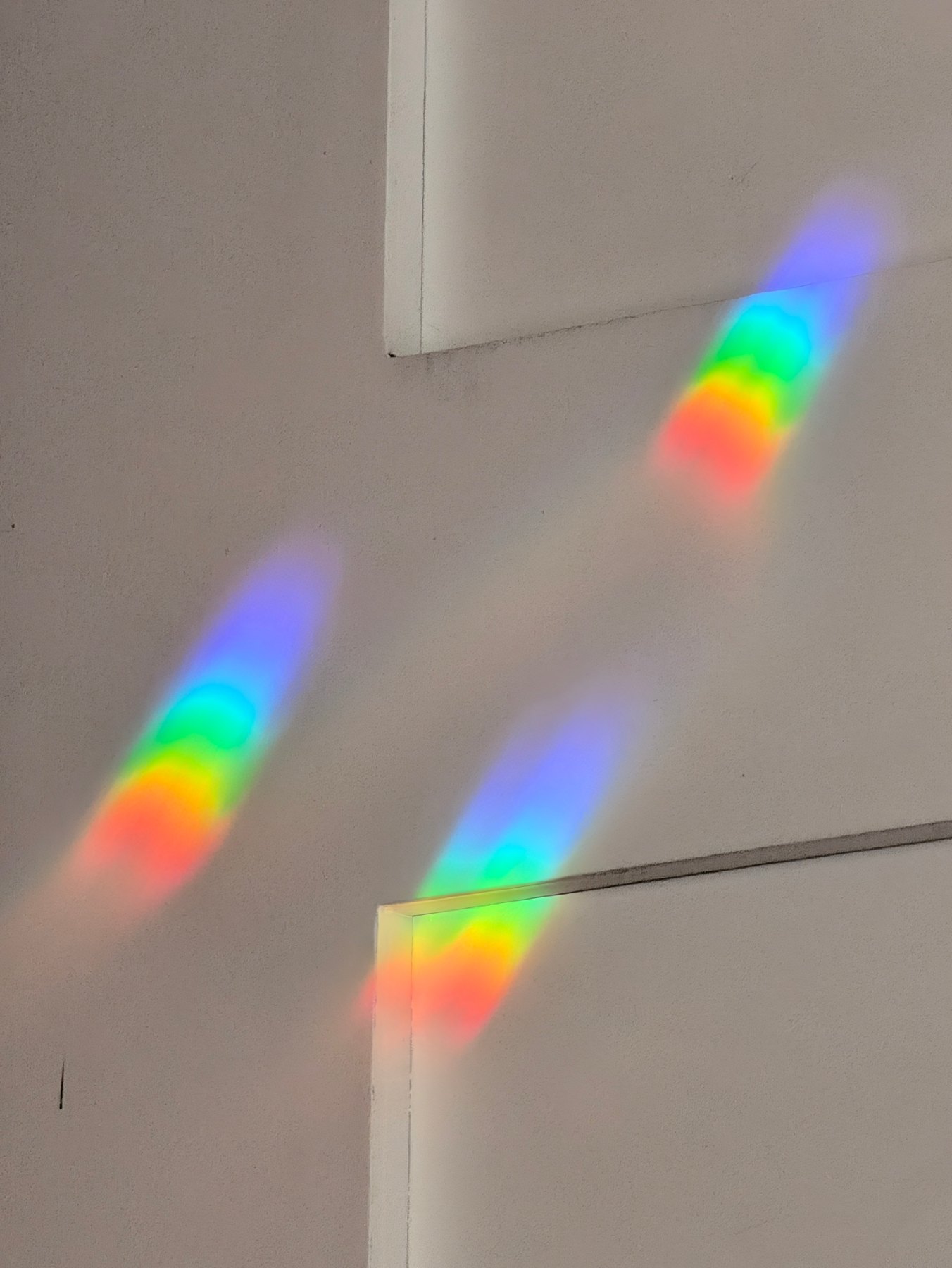
When I was a kid, my mom had a bunch of prisms hanging in the living room window. When the sun hit them just right, the entire room would fill with rainbows. Beams of sunlight would pour through the windows, illuminating the tiny dust particles floating through the air.
I loved those moments.
I'd usually be alone, wandering around the room looking for rainbows, watching the dust dance through the sunlight. There was something magical about it. I felt safe, grounded, and full of positive energy.
I still have prisms hanging in my windows today. Every once in a while, the sun hits them just right, and I'm reminded of that little magical world I used to disappear into.
But my relationship with nostalgia hasn't always been a healthy one.
I used to get almost high on nostalgia. I'd immerse myself in it, sometimes adding music to amplify the feeling. It could be incredibly powerful, almost intoxicating.
But it always came at a cost.
Nostalgia felt like a visitor. An old friend who would show up unexpectedly, bringing this overwhelming sense of warmth and wonder. I'd be so happy to see them.
And then I'd feel them starting to leave.
I'd grasp at the feeling, desperately trying to make it stay. I'd ruminate on the memories, replaying them, trying to squeeze every last drop of emotion out of them.
But the harder I tried to hold on, the faster it seemed to disappear.
And when it finally left, I felt lonely.
It was a strange thing, feeling like I was mourning something simply because it was in the past. I knew there was something illogical about it, but that didn't make the sadness any less real.
Eventually, I started to resent nostalgia. I actively avoided it. I even told people, "I hate nostalgia."
That never came across particularly well.
But I knew there had to be something more to it. Why would an emotion capable of producing so much joy consistently leave me feeling so empty?
Over the years, I started looking behind the curtain.
At first, I simply learned to stop fighting it. When nostalgia visited, I'd let it be. I wouldn't try to force the feeling or make it last longer than it wanted to.
And strangely enough, it often lasted longer. Sometimes an entire day.
But eventually it was time to say goodbye, and that still sucked.
It took me years to realize that I'd been approaching nostalgia all wrong.
I was treating it like a place I wanted to return to, rather than a feeling that was trying to tell me something.
I can't recreate those moments from my childhood. I can't go back to that living room as the kid I once was.
But I can recreate the circumstances that made those moments meaningful.
I can hang prisms in my windows. I can sit quietly and watch sunlight move across a room. I can put on music that stirs something inside me. I can create new experiences that evoke those same feelings of wonder, safety, and curiosity.
And those new experiences don't have to be copies of the old ones.
That's when nostalgia changed for me.
What was once an incredibly powerful but ultimately sad emotion became something positive, exciting, and creative.
Nostalgia still visits me. I still feel it just as intensely as I ever did.
But now, instead of desperately trying to convince it to stay, I listen to what it has to say.
And its words bring excitement, hope, and wonder.
I've come to believe that nostalgia is like any other emotion. It's a signal. A signpost. It's trying to tell us something about ourselves, about what we value, about what makes us feel alive.
It's not a place to hang around and wait.
Nostalgia is a really good guide if you let it be.